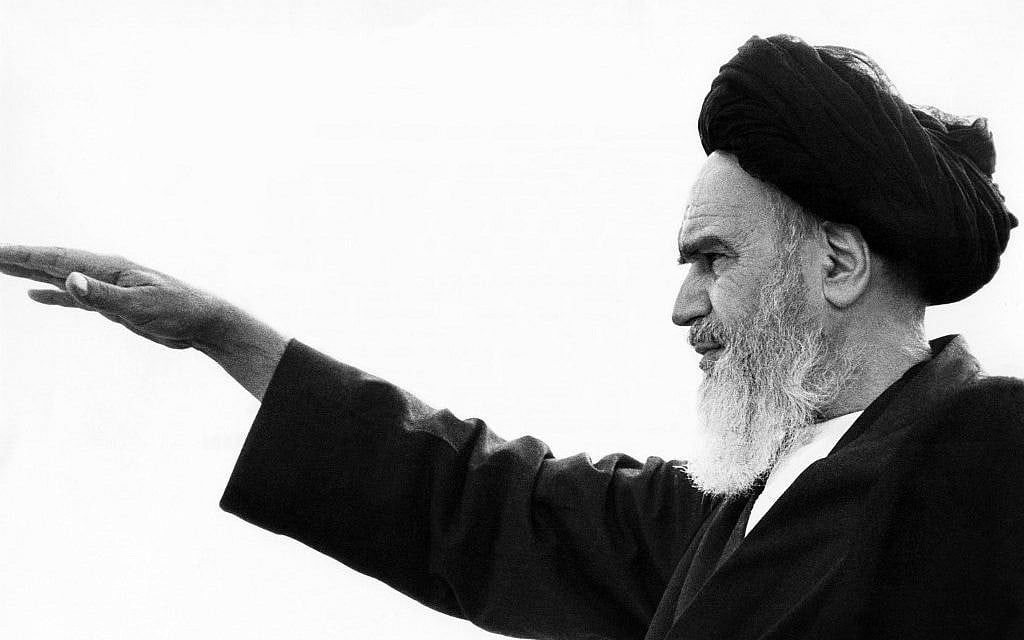
In January 1979, a 76-year-old cleric with a black turban and a face that never smiled stepped off a plane in Tehran. He had spent 15 years in exile. He had no army, no political party, no serious money. What he had was a cassette tape ministry, a network of mosques, and an idea so powerful it would outlive him by decades. God, not the people, should rule.
Within weeks, the Shah collapsed. Not because Khomeini outgunned him. Because Khomeini outbelieved him.
That moment changed everything. Not just for Iran. For you. This is the argument Hamed Abdel-Samad lays out in a recent video essay. His claim is unsettling. Khomeini may be the single most influential political figure of the twentieth century. Not because he shaped the century he lived in, but because he shaped the one that came after.
The first people to notice were the Saudis. A Shia cleric had just ridden religious fervor straight into a presidential palace, and the Saudi royal family, which justified its own rule through Islam, suddenly looked tepid.
Their arrangement had always been quiet. We keep the oil money, you keep the mosques, everyone stays calm. Khomeini made that look like a betrayal. So the Saudis opened the checkbook. Billions flowed into Wahhabi and Salafi institutions across the Muslim world. Mosques in Jakarta, schools in Lahore, prayer halls in London. The goal was to out-Islamize Iran. It worked, in a sense. It also created the soil from which al-Qaeda and ISIS would eventually grow. That is the thing about chain reactions. Nobody controls them once they start.
The second shockwave came from Afghanistan. That same December, the Soviets invaded. American money, Saudi money, and Pakistani intelligence converged on the mujahideen. Young men from across the Arab world flew in to fight a holy war, carrying with them a lesson they had absorbed from watching Tehran on television. Faith beats firepower. When the Soviets withdrew in 1989, these men believed God had granted them victory over a superpower. The natural next question was which superpower comes next. We watched the answer unfold on live television on September 11, 2001.
But Abdel-Samad’s argument goes somewhere unexpected. He believes the real legacy of Khomeini is not in the Muslim world at all.
Before 1979, Western political science had a tidy theory called secularization. As countries modernize, religion fades from public life. Iran blew that apart. Here was a country with universities, a growing middle class, women in miniskirts on the streets of Tehran. And it chose theocracy. Not because it was backward, but because a charismatic leader understood something Western intellectuals had stopped taking seriously. People do not live by bread alone. They live by meaning. And religion remains the most powerful meaning-making machine ever built.
The West took notes. In 1979, the same year Khomeini returned to Tehran, Pope John Paul II visited Poland. Millions of Poles gathered, and in that gathering they rediscovered something the Communist government had tried to bury. That they were still a nation, still Catholic, still unbroken. The Solidarity movement followed. The Berlin Wall fell a decade later. Nobody would call John Paul II a Khomeinist. But the mechanism was identical. Sacred identity, mobilized against a secular state, proved stronger than anyone anticipated. Meanwhile in the United States, evangelical Christianity was transforming from a private faith into a political machine. In Latin America, liberation theology was turning priests into revolutionaries. Across the world, religion was climbing back into the driver’s seat of politics.
Now look at who runs the world, Abdel-Samad says.
Trump wraps himself in Christian nationalism, holding a Bible outside a tear-gassed church. Putin has rebuilt the Russian Orthodox Church as a pillar of his regime, casting himself as defender of traditional civilization. Erdoğan invokes Ottoman glory and Islamic identity to justify his grip on Turkey. Netanyahu leans on biblical claims to the land, turning a political conflict into a sacred one that cannot, by definition, be negotiated.
None of them are clerics. None run theocracies. But all of them have internalized the lesson Khomeini taught in 1979. When you dress politics in the clothes of God, your opponents stop being wrong and start being evil. And you do not compromise with evil.
Abdel-Samad calls this the “new Khomeinism.” It is not a religion. It is a technique. The discovery that sacred language, whether from the Quran, the Bible, the Torah, or the myth of national destiny, operates at the level of identity rather than interest. It tells people not just what to want but who they are. And once you have defined who someone is, you own them.
To understand why this works so well, Abdel-Samad reaches back into Persian history long before Islam. The idea of the ruler as “the shadow of God on earth” is not Quranic. It is Persian, stretching back to the Zoroastrian and Sasanian empires. Khomeini’s doctrine of velayat-e faqih essentially grafted this ancient concept onto Islamic law. The supreme leader is not merely political. He is God’s representative. To oppose him is to oppose God. It is the oldest trick in the book of power, and it is the one trick modernity was supposed to have retired for good.
It didn’t.
The uncomfortable conclusion is that we are living through a civilizational regression. The rational, pluralistic order that took centuries to build is being dismantled by leaders who have discovered that myths move people more than facts ever will. That a story about blood and soil and divine destiny will always outperform a story about GDP growth and institutional norms. That the Enlightenment was not a permanent achievement but a temporary truce.
The old man in the black turban is dead. His method is the operating system of twenty-first century power. And until we reckon with that, we will keep being blindsided by a world that keeps choosing sacred fury over the hard, boring, thankless work of building a civilization that belongs to everyone.